
Treatment
Porcelain Veneers
Hand-finished porcelain, bonded to the front of your teeth. Thin enough to be conservative, layered carefully enough to look like enamel.
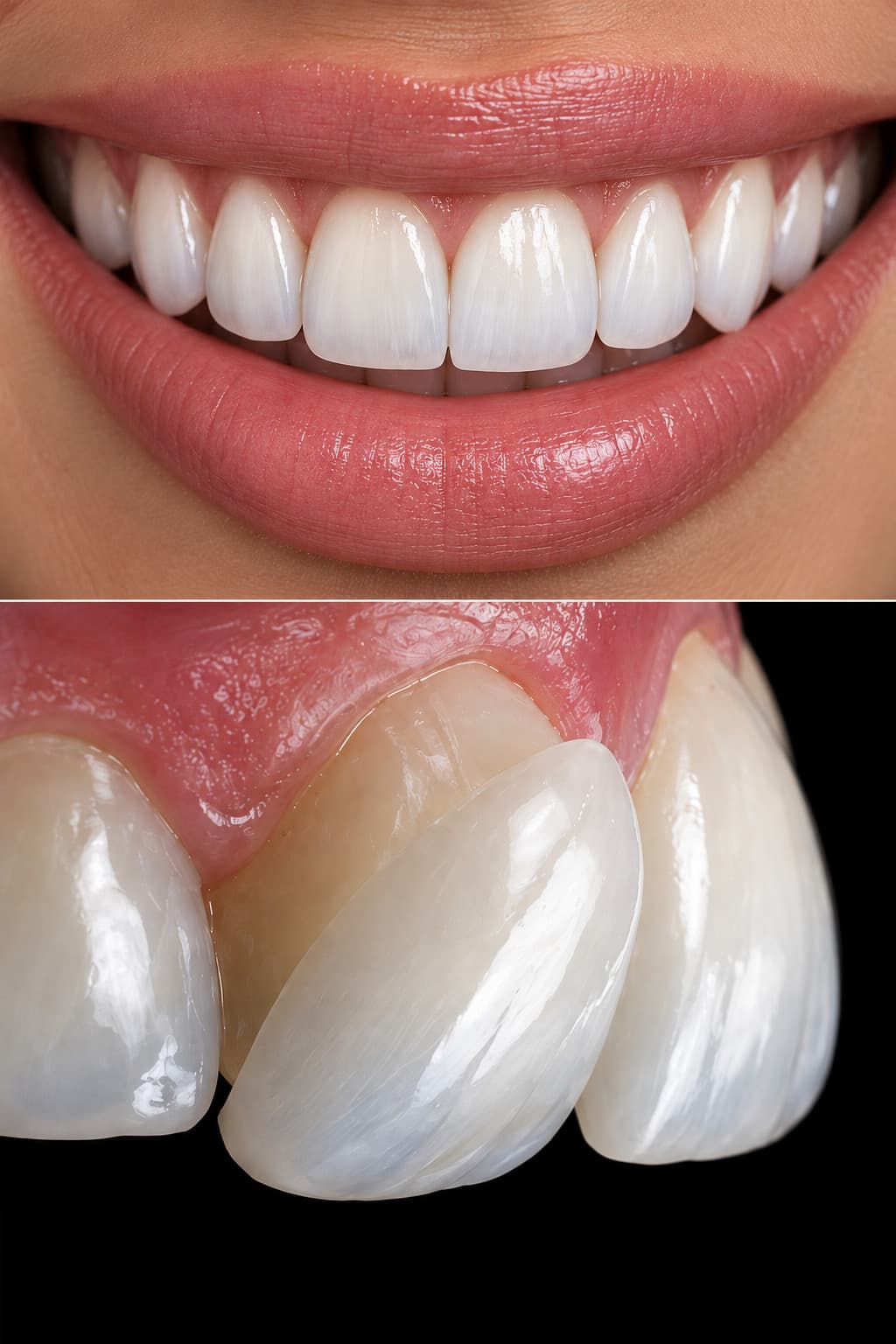
Veneers are ultra-thin shells of porcelain bonded to the visible surface of a tooth. They correct shape, length, color, and small alignment issues all at once, which is why they sit at the center of most cosmetic cases. The material matters: good porcelain catches light the way enamel does, with depth and translucency rather than a flat white surface.
We design first. Photographs, digital scans, and a study of your facial proportions produce a proposed shape and length that you review and adjust before any preparation begins. A minimal amount of enamel is then reshaped, the teeth are scanned, and the veneers are crafted to that design. At the fitting appointment we try them in before bonding, so you see them on your own face while there is still room to refine.
Veneers fix several things simultaneously that would otherwise take multiple treatments: discoloration that whitening cannot lift, worn or chipped edges, small gaps, and teeth that are shaped differently from one another. Done well, nobody can tell you have had anything done. They simply cannot find anything wrong.
FAQ
Frequently Asked Questions
Common questions about Porcelain Veneers.
Patients with intrinsic staining, worn or uneven edges, small spaces between the front teeth, teeth that are narrow or short in proportion to the smile, or older bonding and veneers that have discolored at the margins. Veneers also complete cases where aligners have straightened the teeth but the shapes still need refining.
Two main appointments after the design consultation: one to prepare and scan, one to try in and bond. You wear temporary veneers in between, which also serve as a preview you can live with for a couple of weeks. Anesthetic is used for the preparation appointment, and most patients describe the bonding visit as easy.
From design approval to final bonding is typically two to three weeks. Larger cases involving eight or ten units may take slightly longer, and where whitening of the lower teeth or minor alignment is part of the plan, that happens first so the veneers can be matched to the finished result.
Veneers involve permanently reshaping a small amount of enamel, so this is not a reversible treatment. That is precisely why we invest so much time in the design stage. Porcelain is strong but not indestructible, so a night guard is recommended if you grind, and biting nails or ice will eventually cost you a veneer. Cosmetic work is generally not covered by insurance.
You can eat normally once anesthetic has worn off, though we suggest going gently for the first day while the bond fully sets. Some temperature sensitivity for a week or two is common and settles. Your gums may be slightly tender where the margins sit, and that resolves within days. We review you a week or two later to polish, adjust, and make sure the bite is even.
Get Your GLOW On
Your smile deserves this kind of attention
A boutique practice in Aliso Viejo, built around smile design, comprehensive care, and the kind of unhurried attention that makes dentistry feel different. We would love to meet you.